
Do People Trust Your Leadership?
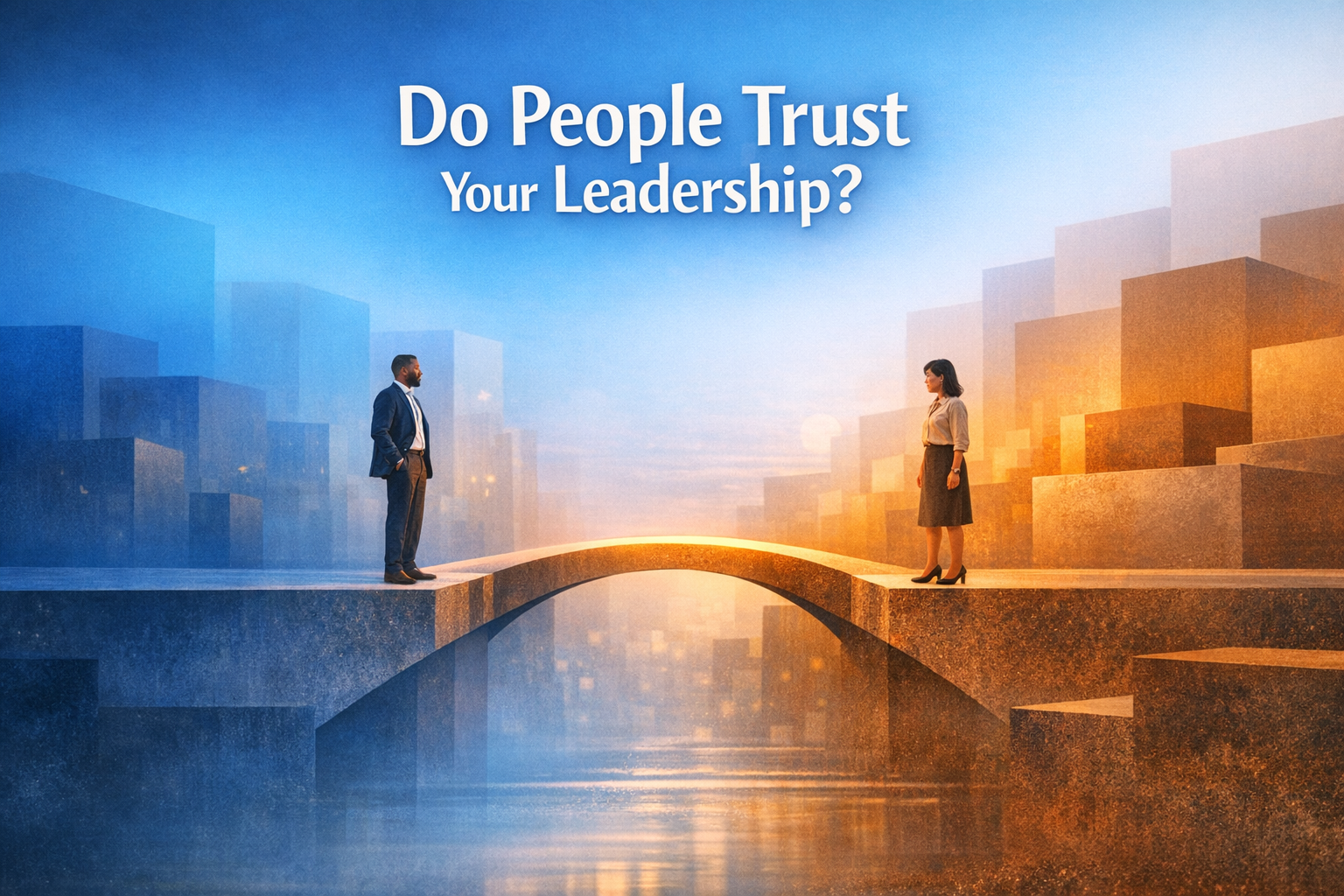
Most leaders assume trust is present unless someone explicitly tells them otherwise. The reality is that trust rarely collapses in dramatic fashion. Instead, it usually fades quietly through small inconsistencies that accumulate over time. This is why the more useful question is not whether you intend to be trustworthy, but whether the people you lead actually experience your leadership as steady, reliable, and grounded.
Several years ago, I worked with a CEO who had all the traits you would expect from a high-capacity leader. This person was sharp, driven, and deeply invested in the organization’s mission. Yet the team operated in a state of guarded caution. Collaboration felt stiff, meetings lacked honest dialogue, and most decisions were met with hesitation rather than momentum. When I met privately with team members, their concerns were remarkably aligned. They explained that expectations shifted without explanation, priorities changed from week to week, and they were never quite sure what version of their leader would show up on any given day.
They wanted to trust their leader, but the unpredictability made it difficult. None of this stemmed from malicious intent. The leader believed they were communicating clearly and supporting the team well. What they had not realized was that trust is measured not by what we aim to communicate, but by the effect our leadership has on others. The gap between the CEO’s intentions and the team’s actual experience was precisely where trust had weakened.
The Triple Loop Leadership View of Trust
In the Triple Loop Leadership framework, trust is formed at three interconnected levels. Understanding these layers helps leaders strengthen trust in a meaningful and sustainable way.
The first loop focuses on what you do. This is the behavioral layer, where reliability and consistency matter most. When leaders follow through on commitments, communicate changes promptly, and maintain alignment between their words and actions, trust has room to grow. Even small inconsistencies, if repeated, can erode trust surprisingly quickly.
The second loop centers on how you think. Trust deepens when your team understands the principles and values that guide your decisions. People do not need to agree with every decision you make, but they do need to understand how you arrived at it. When your team can anticipate your reasoning, they feel steadier and more confident, even during moments of change or pressure.
The third loop involves who you are becoming. This is the deepest level, where character, humility, and self-awareness come into play. Leaders who acknowledge mistakes, share what they are learning, and show a willingness to grow cultivate a form of trust that is durable and influential. Teams respect leaders who are authentic and grounded far more than leaders who try to project perfection.
When all three loops are active in daily leadership, trust becomes a natural outcome rather than an aspirational goal.
A Story of Trust Rebuilt Over Time
One of the most powerful transformations I have seen came from a director who inherited a discouraged and hesitant team. Instead of focusing on performance metrics or sweeping operational changes, the director began by opening up their leadership process in simple and consistent ways.
Each Monday, the director shared their priorities for the week and explained the reasoning behind them. This gave the team clarity and a sense of direction. Every month, they met with team members and asked where their leadership felt unclear or inconsistent. These conversations were not defensive or evaluative; they were genuine invitations for honesty. And every quarter, the director publicly identified one personal leadership area they were working to improve. This modeled growth in a way that felt sincere and accessible.
Over time, the team began to relax. People started speaking more freely during meetings. They took initiative without fear of misalignment. They addressed conflicts sooner and collaborated more openly. Eventually, the team became one of the most effective groups in the organization. The improvement did not come from a new strategy or structure. It emerged because the leader rebuilt trust through clarity, consistency, and a visible commitment to their own growth.
In an environment where skills can be learned and systems can be optimized, trust remains the one leadership advantage that cannot be manufactured or delegated. When people trust their leader, they bring more creativity, more initiative, and more candor. When trust is lacking, even talented teams hold back, protect themselves, and operate from caution rather than confidence.
Trust does not make leadership effortless, but it does make leadership far more effective. It strengthens culture, reduces friction, and creates conditions where people can bring their best thinking forward. Ultimately, people follow leaders they trust, not leaders they fear or leaders they simply tolerate.
If You Want to Strengthen Trust in Your Leadership, I Can Help
If you sense that trust within your team could be stronger, or if you want to build a leadership presence that inspires confidence and clarity, I would welcome the opportunity to support that growth. My coaching is designed to help leaders integrate the Triple Loop Leadership framework into daily behaviors, decision-making, and personal development. Together, we can address the relational gaps that may be slowing your team down and build a foundation of trust that elevates your leadership.
If you are ready to explore this work more deeply, I invite you to schedule a free coaching conversation at www.ccdynamics.org/contact. Let’s strengthen the trust that makes effective leadership possible.